Posted December 23rd, 2020

The RCI and Interval Class Action Lawsuits
Class Action Lawsuits can have significant implications for consumers, businesses, and entire industries, often bringing widespread legal issues into the public spotlight. This article provides an overview of the initial lawsuit, the allegations involved, and the “settlement” for affected owners. More importantly, we breakdown the 2nd class action that ultimately provides owners with relief from decades of ongoing issues.
Resort Condominiums International, commonly known as RCI, is the largest timeshare exchange company in the world. In the early days of timeshare where owners simply owned fixed weeks the exchange process was both simple and clear, and it worked. Then came floating weeks, before RCI decided to introduce a system of points. In the early 2000’s the points program was launched, and this is where the problems started.
Because points have no specific purchase attached to them, meaning no specific condo or property like a fixed week, there is no limit to the number of points that can be sold. By 2015, every timeshare developer switched to selling points in some capacity, capitalizing on what had become a never-ending scheme.
The Problem

RCI points were retailed by individual resorts or developers in place of fixed or floating weeks with the result that annual maintenance fees were attached to their “home resort“. Taking a simplistic view: if a resort has one condo that was sold as fixed weeks then there could only be a maximum of 52 owners. However when points are retailed the number of owners increases exponentially and in reality has no limits. Owners became frustrated about the fact that they experienced problems making reservations at their home resort and when trying to use the exchange system.
Another allegation against the exchange companies was that availability was further damaged by the renting out of inventory to non-owners. When a calculated audit was conducted, it was brought to light that owners had an average of 11% availability when trying to make an exchange.
The 1st Class Action & Settlement
In January 2010 a Class Action was presented in the United States District Court. The main claim was as follows: “Consumer Fraud Act by failing to provide RCI & Interval International exchange members sufficient access to affiliated resorts.” After various appeals RCI eventually reached a settlement over allegations it improperly rented timeshare inventory to non-members. If the owner’s home resort was affiliated with RCI or II it may be eligible for a settlement. The settlement “resolved” the 1st class action lawsuit, although both exchange companies denied they did anything wrong, but agreed to settle to resolve the litigation.
Members of the settlement included all who were members on or before April 25, 2012. Members of the class action lawsuit settlement would receive one of the following cash benefits, as long as they submitted a valid claim by the then deadline of August 24, 2012:
- Current Exchange Program members received a $12 cash payment.
- Former Exchange Program members received a $10 cash payment.
The settlement is understood to have cost RCI and II approximately $19,000,000 to members of the settlement class. Final approval of the settlement was granted so the payouts began. While financially, individual owners had settlements not worth the paper they were printed on, the moral victory was a great success.
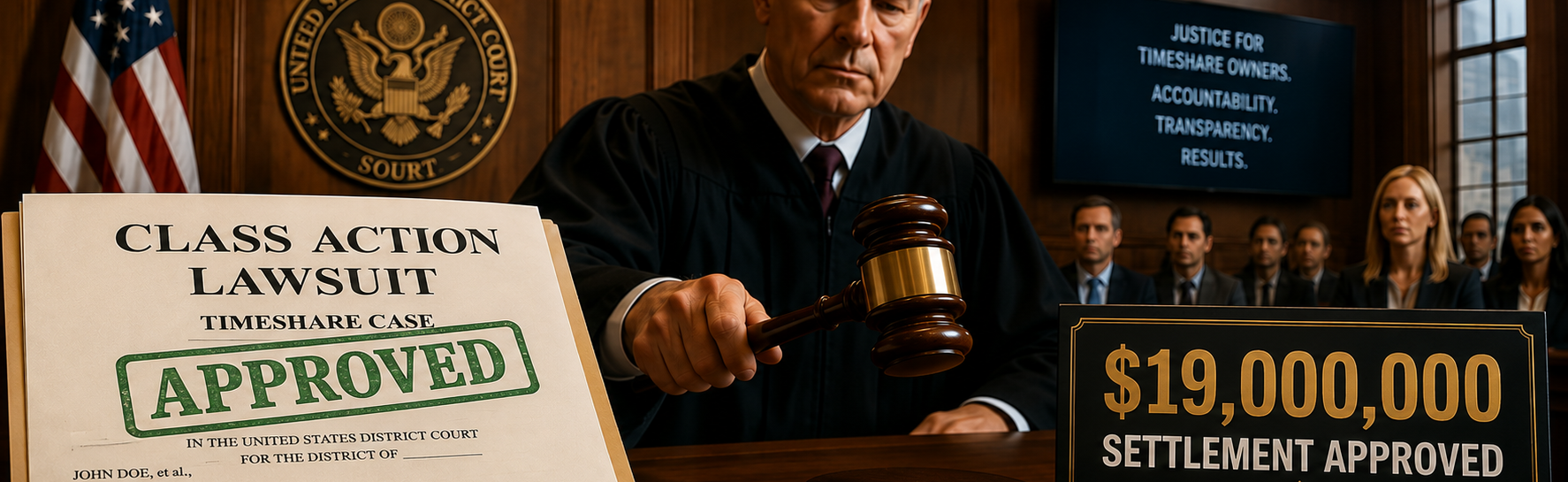
But Owners still had the same issues;
- Maintenance fees have to be paid to their developer whether they use their week or points (regardless if they are denied a reservation). Some owners refered to this as “mafia-style extortion“.
- The Perpetuity clause attached to an owners deed, handcuffs the primary owner and their heirs, unless legal action is taken. A timeshare attorney is the best way to nullify a deed in perpetuity. The average cost of a qualified timeshare attorney is $12,000-$15,000 per contract.
- 11% availability forces most owners to continue to pay for their ownership they cannot use, and spend money outside of their timeshare to go on vacation.
The 2nd Class Action Lawsuit
In August 2019, a few short months after the Florida Senate brought HB 435 to the floor for votes – ARDA stepped in with the intent to get owners relief before it was too late. Luckily, HB 435 didn’t receive enough votes to pass, and has been struck down multiple times since. If the house bill passes in the future, it would prohibit a timeshare owner and their heirs from seeking legal representation to get out of their contract.
In July 2020, Timeshare owners class counsel successfully won the lawsuit. Owners that qualified were granted legal entitlements, which included compensation towards legal representation to nullify their contract(s) and protect their heirs. The entitlements were on a case-by-case basis.
Unless you’ve been living under a rock, you know the developers can’t be trusted to contact owners and go over their options that would ultimately end in the termination of their contract. For decades the sales representatives at resorts have lived in the “gray area”, locking people into contracts and getting them to “upgrade” into more recurring revenue for the resort (maintenance fees).
The Class counsel had to contract a non-bias 3rd party to disclose the information to owners, and help facilitate their entitlements. After careful consideration, an established company that sells an exclusive travel program that already had travel teams in place landed the multi-year contract. This partnership made their pay-as-you-go model the new industry standard.
Qualifying Owners had 3 legal entitlements from the settlement;
- Guaranteed release of their deed(s).
- Allowance credit to use towards the total opt-in package, including legal fees and closing costs.
- Exclusive access to the industry leading VIP travel membership on a pay-as-you-go basis. No contract, No deed, No maintenance fees.

The contracted company continues to hold Property Owner Disclosure meetings with owners, usually within a 50 mile radius of an owners primary residence. At these meetings, certified specialists disclose the information about the lawsuit, what exact entitlements an owner has and help facilitating their timeshare-free future. 5 months in data shows 94.7% of owners that attended the meeting opted to accept their legal entitlements and terminate their contracts/maintenance fees, a massive relief for owners versus the $12 check from the first settlement.
The outcome of these class action lawsuits serves as a reminder that timeshare owners have legal rights and that developers can be held accountable when those rights are violated. While every owner’s situation is unique, understanding the history of these cases can help consumers make more informed decisions before signing any long-term commitments. The timeshare industry continues to evolve, and staying informed has never been more important. – The Timeshare Blog
More detailed information on owner’s entitlements can be found under the “Legal Entitlements” Tab.

 The Timeshare Blog